People have used perfume for thousands of years. They help us feel, make a change, and show up. Today, there are two main types of perfumes: natural perfumes, made from plants and animals, and synthetic perfumes, made in labs. Understanding how they differ can help you choose the right scent that matches your tastes, lifestyle, and skin type. In this article, we will discuss both types in depth. We will cover their prices, safety, pros and cons, and long term effects.
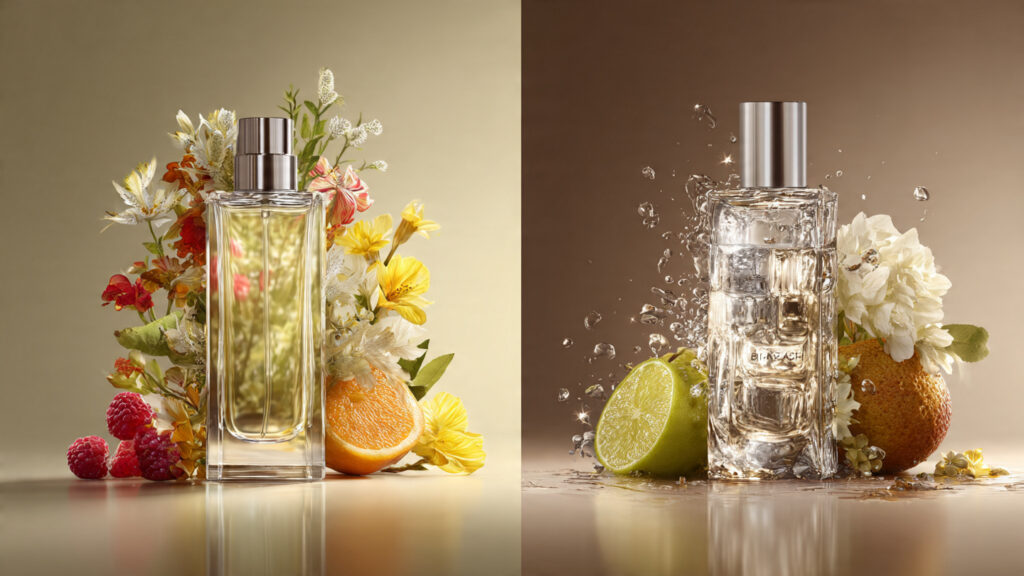
Understanding Natural Perfumes
What Are Natural Perfumes?
Natural ingredients are used to create natural scents. Some of these are fruits, spices, herbs, woods, spirits, essential oils, and flowers. People have used synthetic chemicals that make natural scents unpleasant. Natural scents smell authentic because they use essential oils, such as rose or sandalwood. Natural perfumes are made from plants, so many people think they’re better for skin that is easily irritated.
Natural Perfume Ingredients
Natural scents are made with plant based ingredients such as essential oils, absolutes, tinctures, and more. Essential oils are highly concentrated plant extracts, and absolutes are similar but produced through a more complex process. To extend scent longevity, some perfumes use natural fixatives, such as resins and balsams. Unlike counterfeit perfumes, these scents do not contain chemicals such as phthalates or synthetic alcohols.
Benefits of Natural Fragrances
Natural perfumes are gentle and calming. They are probably less likely to hurt the skin or cause rashes. Also, natural perfumes smell different at different times, making a unique fragrance experience. Natural perfumes are also popular because they are eco friendlier—they are made from materials that can be reused and broken down by bacteria.
Understanding Synthetic Perfumes
What Are Synthetic Perfumes?
Lab made chemicals are used to make artificial smells. These chemicals are designed to smell like natural materials or to create new scents that do not. Artificial chemicals are used in most fragrances because they are easier to produce in large quantities and last longer than natural ones.
Ingredients Used in Synthetic Perfumes
Chemicals such as acids, stabilizers, and synthetic alcohols are used to create artificial smells. Many people like vanillin, a chemical that smells like vanilla, linalool, a flower scented chemical, and artificial musks. These materials make bright, durable smells and are less expensive than natural scents.
Advantages of Synthetic Perfumes
Artificial smells do not fade as quickly, are more readily available, and cost less. They can offer natural scents, such as oud or jasmine, that are hard to find or costly for most people, at very low prices. Also, synthetic perfumes usually have stronger projection and longevity, meaning the scent lasts longer on the skin.
Differences Between Natural and Synthetic Perfumes
Scent Profile and Complexity
Natural perfumes tend to smell more subtly and intricately, evolving over time to create layers of scent. A synthetic perfume will likely smell the same every time and be as strong or as weak as you want it to be.
Long Life and Performance
Synthetic fragrances typically last longer on the skin due to chemical fixatives. Essential oils tend to evaporate, so natural perfumes may not last as long. Natural perfumes, on the other hand, might make a more subtle, pleasant smell that goes with your body chemistry.
Cost and How to Get It
Natural perfumes are usually more expensive because they take a lot of time and money to source and produce. Stores around the world carry more synthetic scents, which are also cheaper. For this reason, artificial scents are used every day.
Health and Safety Considerations
Allergies and Skin Reactions
Both organic and synthetic scents can trigger allergies, but the likelihood is not always the same. Natural perfumes can irritate sensitive skin if applied incorrectly with certain essential oils. Synthetic smells may contain chemicals that can cause skin or breathing issues for some people.
The Lasting Impact of Perfume Chemicals
Some studies suggest that exposure to many synthetic fragrance chemicals, such as phthalates, may have long term effects on your health. In this case, natural perfumes are generally considered safer, but some essential oils can be harmful if used too much or applied to the skin.
Choosing a Safe Perfume
To be safe, always perform a patch test and read the ingredient labels before wearing cologne. You could try perfumes that are safe or free of synthetic ingredients if your skin is easily irritated. You can also pick organic smells that are natural and approved by well known groups.
How perfumes impact nature
How natural smells affect the world
The ingredients in natural perfumes are safe for the environment and decompose naturally. It is better for the world if many companies get their plants in ways that do not harm them and do not use harmful chemicals.
Pollution and synthetic perfumes
The chemicals used to make artificial cologne may harm water and air. Additionally, synthetic fragrances may harm the environment because they do not break down as quickly.
Choices that are good for the environment for consumers
To be more eco friendly, pick perfumes that come in reusable containers, are made with organic ingredients, or are made by companies that care about the earth. Supporting natural perfumes makes it easy to buy things fairly and helps reduce chemical waste.
Experience with Longevity and Fragrance
The Changes That Happen to Natural Perfumes Over Time
Over time, natural perfumes often change on the skin, revealing their top, middle, and base notes. This slow rise gives you a uniquely personalized smell.
How Synthetic Perfumes Maintain Consistency
Synthetic scents are designed to remain consistent over time. This means they are ideal for people who want to smell the same way every day, regardless of the circumstances.
Choosing a Perfume According to Your Lifestyle
If you like smells that do not get stronger and change over time, natural perfumes might work for you. If you need a strong, long lasting scent for work or events, synthetic perfumes are generally the better option.
How to Apply Perfume
Using Natural Fragrances
When natural perfumes are put on pulse points, like the neck, arms, and the back of the head, they smell better. You may need to reapply them during the day to maintain the scent, as natural scents are lighter.
Applying Synthetic Perfumes
Artificial smells are stronger and last longer. After just a few drops, you can usually smell it for hours. Do not spray too much; you and anyone nearby will be overpowered.
The Right Way to Store Perfumes
All scents should be kept away from heat, light, and humidity to preserve their scent. Because natural perfumes may degrade more quickly, it is best to store them in a cool, quiet space.
Popular Natural Perfumes to Try
Floral and Citrus Perfumes
Flower and citrus based perfumes have a fresh, light scent. A lot of people enjoy the smells of bergamot, lavender, rose, orange flower, and more because they make you feel better.
Earthy and Woody Scents
Natural woody scents typically include sandalwood, cedarwood, vetiver, and similar ingredients. You can use these warm, grounding scents every day or save them for nights.
Rare and imported scents
Some of the rarest ingredients in natural perfumes are oud, pure jasmine, and ylang ylang. These are the fanciest perfumes, and they will make your nose happy in a way that no other perfume can.
Popular Synthetic Perfumes to Try
Classic Synthetic Scents
Vanilla, musk, and amber are common artificial smells in perfumes. People like these smells because they are versatile and long lasting.
Modern Synthetic Perfumes
Many modern perfumes use synthetic chemicals to create new and interesting scents. Synthetic chemistry is often used to make the bright notes in sweet, fruity, and watery smells.
Everyday Inexpensive Perfumes
Since fake perfumes come in different price ranges, it is easy to find a daily scent that smells great and does not cost much. Many grocery name brands perform well and are inexpensive.
Making the Right Choice for You
Factors to Consider
If you have a limited budget, sensitive skin, or specific smell or lifestyle preferences, you can use either a natural or a synthetic perfume. Choose whether your most important factor is cost, safety, life, or being special.
Scent Memory and Personal Preferences
When perfume touches your skin, it makes a unique smell. By trying both native and synthetic scents, you can determine what you prefer and what works best for you.
Aiming for the Best Price and Quality Balance
Although they can be expensive, natural scents often smell better than synthetic ones. Synthetic smells are cheap and long lasting. You can enjoy your scent and still get what you need as long as you find the right mix between cost and quality.
FAQs
1. Are natural perfumes safer than synthetic perfumes?
Not always. Natural ingredients can still cause allergies or skin reactions. Safety depends on formulation, skin sensitivity, and proper testing rather than whether a perfume is natural or synthetic.
2. Do synthetic perfumes last longer than natural perfumes?
Yes, in most cases. Synthetic perfumes usually last longer and project better because lab-created molecules are more stable than natural essential oils.
3. Which type of perfume smells better natural or synthetic?
Scent preference is personal. Natural perfumes often smell softer and more organic, while synthetic perfumes can offer more complex, bold, and long-lasting scent.
4. Are natural perfumes eco-friendly?
Natural perfumes can be eco-friendly if ingredients are sourced carefully. However, overharvesting plants can harm the environment, so sustainability practices matter.
5. Are synthetic perfumes bad for the environment?
Some synthetic ingredients may impact the environment, but many modern fragrance houses use safer, biodegradable compounds. Environmental impact depends on manufacturing practices.
6. Which is better for sensitive skin natural or synthetic perfume?
People with sensitive skin should look for hypoallergenic rather than focusing only on natural or synthetic labels.
7. Are natural perfumes more expensive?
Often, yes. Natural perfumes can be more expensive due to limited ingredient availability and complex extraction processes.
8. Can natural and synthetic ingredients be used together?
Yes. Many modern perfumes blend natural and synthetic ingredients to balance authenticity, performance, and longevity.
9. How do I choose between natural and synthetic perfumes?
Choose based on your lifestyle, skin sensitivity, budget, and scent preference. Trying both types is the best way to decide which suits you.
Conclusion
Both synthetic and natural smells have their pros and cons. Natural scents are harder to find since they cost more than artificial ones. However, they are better for your skin and the earth, last longer, and smell different as they age. What’s best for you depends on your individual preferences, skin sensitivity, and lifestyle. If you know how to tell perfumes apart and know what to look for, you can pick one that smells good and works for your lifestyle.